
Why Your Ads Didn’t Work and What to Fix First

You know that hollow pit in your stomach when you’re glued to the ads dashboard, refreshing like it owes you rent? Clicks look decent. Impressions are “promising.” Your card’s bleeding, but the results? Dead air.
I’ve lived on both sides of that screen, the one spending the money and the one building the campaign. And here’s the truth nobody likes to admit: the ad platforms want you to believe there’s a magic lever. “Boost Post.” “Smart Campaign.” Pick a few interests, toss in a budget, and wait for the money printer to start humming.
Except it never does. Not because Facebook’s rigged or Google’s washed. It’s because ads are fuel — and most small businesses are dumping it into a car with no engine. Or worse, no steering wheel.
Let’s crack open the hood and figure out why your marketing keeps stalling and how to get it running like it should.
The Moment Your Ad Goes Cold (a.k.a. No Retargeting)
A contractor once told me, “We tried Facebook ads. Spent $600. Got nothing.”
I asked, “Where did the clicks go?”
“To our site.”
“And what happened after that?”
He stared at me. “After what?”
That pause right there—that’s the problem.
Top-of-funnel ads do one thing and one thing only: they introduce you. They’re the handshake at a crowded bar, not the proposal. If you don’t follow up with the people who watched your video, clicked your post, or wandered through your site, you just paid to wave at strangers in traffic.
What “talking to them again” actually looks like
Someone watches 15 seconds of your video? Hit them next with an ad that answers the first doubt in their head.
Someone lands on your pricing page and bails? Show them a customer who had the same hesitation and is now bragging about the results.
Someone downloads your freebie? Serve them a 3-minute walkthrough that shows what happens when they actually use it.
No stalking. No sleaze. Just sequencing. You’re building a conversation: hello → here’s why we’re trusted → here’s what to do next.
That’s retargeting. Not some secret trick, but the bridge between “ads don’t work” and “oh, that’s where the money was hiding.”
Sending Clicks to a Lobby Instead of a Door (Landing Page vs. Homepage)
Homepages are museums—polished, impressive, and full of exits.
When you’re paying for a click, you don’t want a museum. You want a doorbell. One door, one sign, one action.
A good landing page isn’t trying to show off. It’s making a single promise and removing every distraction between the visitor and that promise.
“Get the Roof Lifespan Checklist.”
“Watch the 3-Minute Payments Demo.”
“Join the VIP List — free dessert this week.”
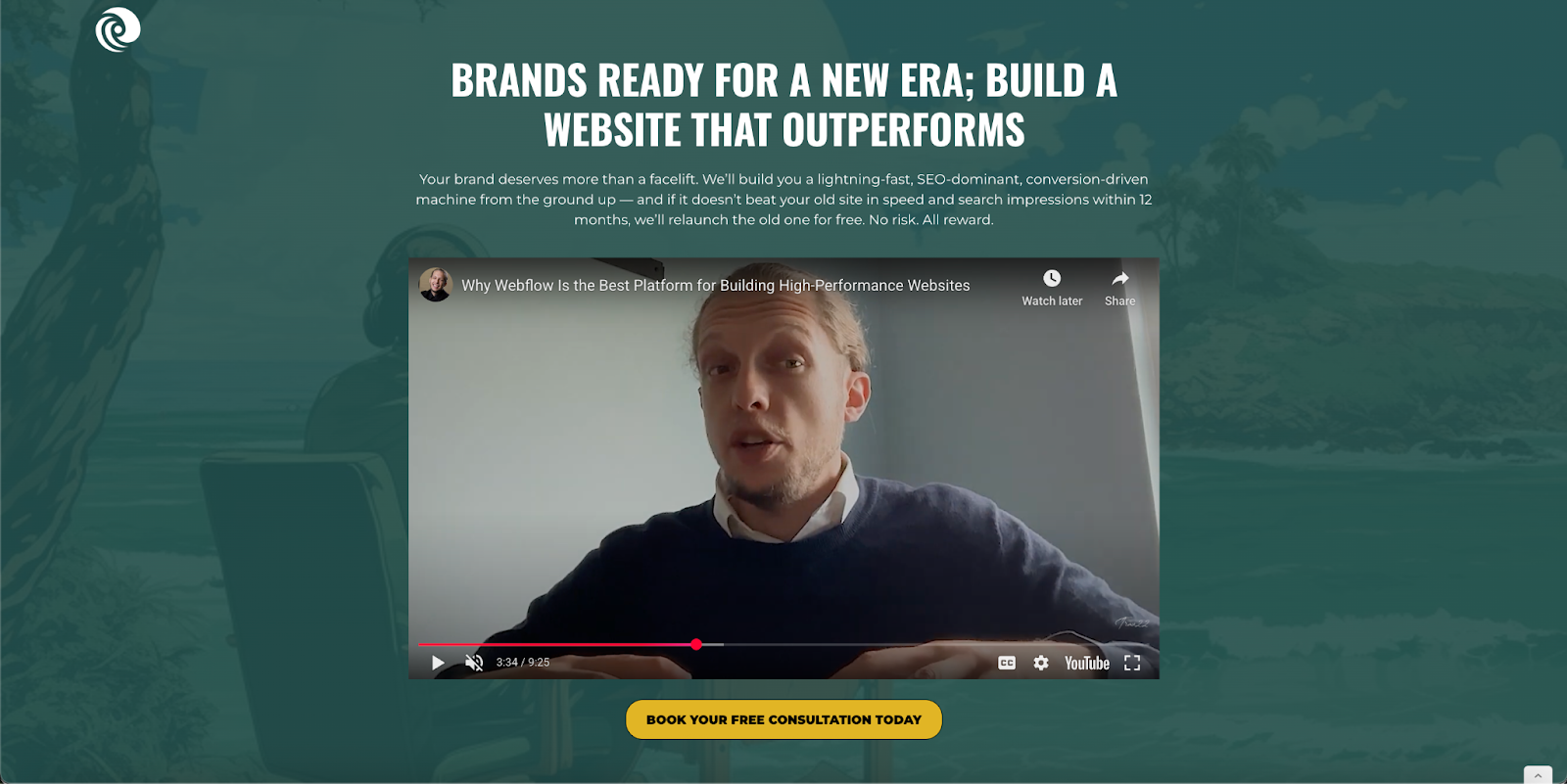
Notice what’s not there: the navigation bar, the twenty shiny links, the “learn more” rabbit hole. A landing page can live on your main domain, but it should speak to one problem that you are solving for a specific audience. It’s a room with one chair and one pen: sit down, sign here, we’ll handle the rest.
And yes—you should offer something, however the lead magnet doesn’t need to be a 47-page PDF or a webinar that puts people to sleep. It can be dead simple. A checklist, a calculator, a short guide. If it solves a small, real problem right now, people will happily trade an email address for it.
You’re not closing the sale yet. You’re just getting their number and earning the right to call again.
The Wrong Conversation at the Wrong Time (Format Mismatch)
I’ve seen brilliant offers die because they showed up wearing the wrong outfit. A “book now” ad aimed at people who barely know you. A 600-word manifesto fired at an audience that would’ve converted after a quick video. Or worse, a glossy brand ad chasing someone who started your form and bailed halfway through. None of those mistakes are about bad offers — they’re about timing. The format didn’t match the moment.
Early Stage — Put a face and a voice to the promise. People buy from people, not logos. Short videos, real faces, human energy. You’re not selling yet; you’re introducing yourself.
Middle Stage — Show proof. Before-and-after photos. Quick testimonials. A 90-second “how we work” video. This is where logic meets emotion. They’re open to you now — give them the evidence that tips them over.
Late Stage — Stay relevant and keep delivering small wins. Solve micro-problems for free. Teach something useful. Keep showing up with value until they’re ready. Consistency builds the kind of trust ads alone can’t buy.
Right message, right medium, right moment. When those three align, the same budget suddenly behaves like twice the budget.
Ads Are Fuel. Build the Engine.
Here’s the quiet part nobody wants to admit on LinkedIn: ads don’t fix a broken system. They just amplify whatever’s already there — good or bad. If your marketing machine leaks, ads only help you lose money faster.
So what’s the engine, really?
It starts with a conversion-ready website — one that loads instantly on mobile, speaks clearly, and doesn’t make visitors wrestle with forms. The main promise should hit them in the first three seconds, not be buried beneath a mission statement or carousel.
Then comes a follow-up plan — not a 19-email epic, but a short, intentional sequence that keeps reframing objections. Email, text, maybe a quick call if the intent’s strong. Real people following up like real humans.
Next, tracking and pixels — Meta, Google, LinkedIn — installed properly and firing where it counts: thank-you pages, key actions, form submissions. Without them, you’re paying to meet the same strangers over and over.
And finally, speed to lead. Minutes, not hours. If someone asks for a quote and you respond tomorrow, congratulations — you just ran a great awareness campaign for your competitor.
A day in the life of one click
A woman sees your 30-second video about avoiding surprise roof costs. She clicks through and downloads your Roof Lifespan Checklist. She immediately gets a thank-you email with a short, useful tip — written by a human, not a template. Over the next two weeks, she sees a mix of case studies (“Storm damage — $0 out of pocket after claim”) and quick testimonials. On day nine, she gets a simple message: “Want us to take a look? Free inspection, 20 minutes.” She books. You show up.
That’s not magic. That’s what it looks like when fuel meets an actual engine.
If You Need a Plan, Here’s One (Without Turning Your Life into a Spreadsheet)
Week 1 — Set the stage.
Get your foundation right before spending another dollar. Install your tracking pixels and build three core audiences you’ll use forever: site visitors, video viewers, and your customer or prospect list (uploaded the ethical way). Then, write one clean landing page — one promise, one action, one form. Cap it off with a simple, actually-useful lead magnet. Short. Practical. Something that solves a real problem right now.
Week 2 — Launch like a human.
Record a 30–45 second video on your phone. Talk about the problem you solve, the outcome you deliver, and where to grab that free resource. Forget the lighting kit and studio polish — your authenticity is the hook. Point the ad to your landing page and hit publish.
Week 3 — Add proof.
Ask one happy customer for a short quote or selfie video. Put it on a simple graphic, or turn it into a 3-frame carousel if you’ve got a before-and-after story. Run that ad to the people who clicked or watched your first one. Proof always outperforms polish.
Week 4 — Make the ask.
Now, everyone who downloaded, watched, or visited your pricing page sees an ad that says, “Here’s how to start.” Send them straight to your calendar or quote form. Follow up faster than anyone else. Keep what works, kill what doesn’t, and drop in one new creative every week. That’s the rhythm.
You’ll feel the shift before the metrics catch up — fewer cold calls, more inbound messages that start with, “Hey, I’ve been seeing your stuff…” That’s not luck. That’s the sound of the engine turning.
What to Watch (so you don’t drown in numbers)
Forget the vanity glitter. Watch the chain:
- Are the right people clicking? (your ad hook and targeting)
- Are clickers becoming leads? (your landing page and lead magnet)
- Are leads turning into appointments? (your follow-up and speed)
- Are appointments closing? (your offer and sales process)
Fix the first broken link before you touch anything else. It’s amazing how fast “ads don’t work” turns into “we need to hire” when the chain is intact.
The Part Where We’re Honest
You don’t need a $50,000-a-day budget to make paid media work. Sure, I know people who spend that much — and yes, it scales — but the principle doesn’t change at $50 a day. Talk to the right people, in the right order, with something worth their time. Keep showing up. Make the next step stupidly clear. Respond fast. Then do it again.
Ads aren’t a lottery ticket. They’re a lever. When your system’s tight, every dollar pushes. When it’s not, every dollar squeaks. Most people blame the platform, but the truth is simpler: the engine wasn’t ready for fuel.
If you want a second set of eyes, send me your landing page and the ad you’re running. I’ll tell you — in plain English — the two changes most likely to move the needle this month. No jargon. No pitch. Just the truth.
FAQs
“Do I really need a separate landing page?”
Yes. Your homepage is for browsing. Your landing page is for doing. One promise. One form. One button. You’ll see the difference.
“How much should I spend to start?”
Enough to learn. For most local or regional businesses, we recommend starting at $1500/month, that buys enough data to see what’s working. You’re investing in insight first, scale second.
“How long until this starts working?”
Assuming you actually follow up on leads (fast), you’ll see signal in a week and momentum in 4–8 weeks. The machine compounds.
“What’s the fastest way to lower cost per lead?”
Make the landing page faster and clearer, add real proof near the form, shorten the form, and retarget warm traffic separately. Then reply to new leads in minutes. That alone beats “more budget” nine times out of ten.
Insights and Trends
Explore our latest articles and insights.